TL;DR:
- Effective hotel reservation management relies on real-time, integrated systems like PMS, channel managers, and booking engines to prevent errors and overbookings. Small UK hotels can boost revenue and efficiency by automating workflows, using pooled inventory models, and maintaining rate parity across all channels. Properly configuring these tools not only reduces manual errors but also frees staff to focus on building guest loyalty.
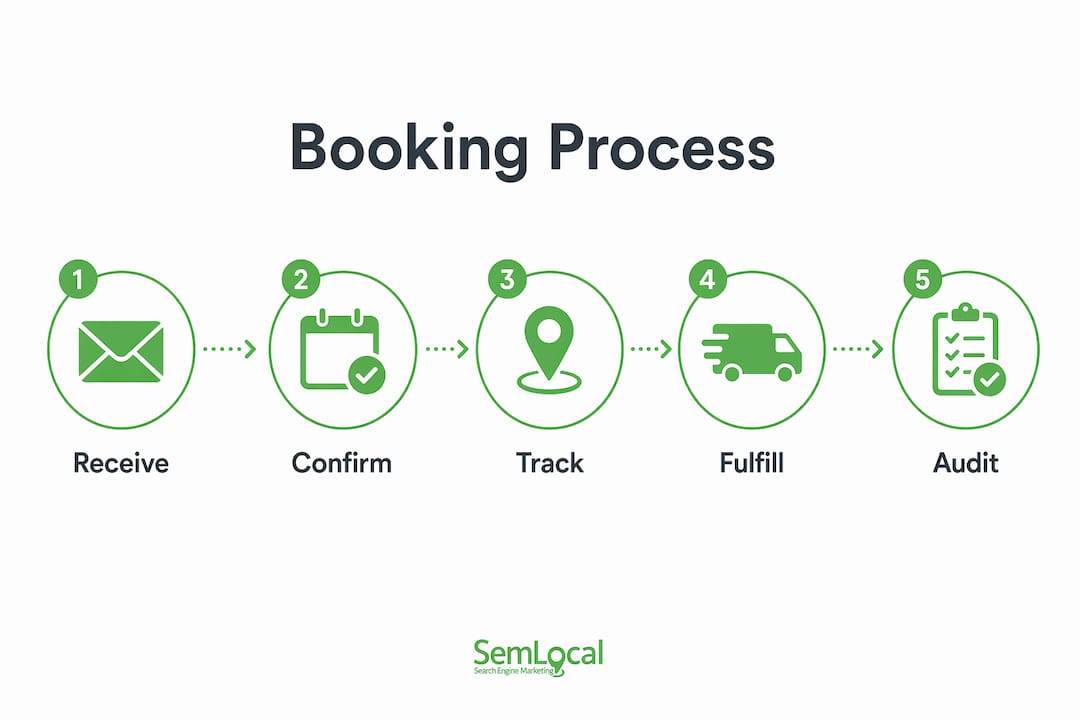
Hotel reservation management is the process of using integrated systems and best practices to receive, confirm, track, and fulfil guest bookings across every sales channel. For small and independent UK hotels, getting this right is the difference between a full house and a costly empty room. The industry standard in 2026 centres on real-time property management systems (PMS), channel managers, and central reservation systems (CRS) working together to prevent revenue leakage. This guide covers the technology you need, daily workflows, group booking strategies, and how to fix the problems that quietly drain profit from your operation.
What technology is essential for hotel reservation management?

A modern hotel reservation system is not a passive calendar. Reservation systems function as strategic revenue engines, integrating pricing intelligence, personalisation, and upselling across every channel. That shift in thinking changes which tools you prioritise.
The four core systems every UK hotel manager needs are:
- Property Management System (PMS): The operational hub. It holds guest profiles, room assignments, billing, and check-in and check-out records.
- Channel Manager: Connects your PMS to online travel agencies (OTAs) such as Booking.com and Expedia, plus your own website. It pushes rate and availability updates in real time.
- Booking Engine: The direct booking widget on your hotel website. It should sync live availability from your PMS and accept secure payments.
- Central Reservation System (CRS): Aggregates inventory across all channels into one view. Larger independent hotels use a CRS to manage rates and availability from a single dashboard.
The table below summarises what each tool does and what to look for when choosing one.
| Tool | Core function | Key features to require |
|---|---|---|
| PMS | Manages on-property operations | Real-time room status, guest profiles, integrated billing |
| Channel manager | Distributes inventory to OTAs | Bi-directional sync, pooled inventory, stop-sell automation |
| Booking engine | Captures direct bookings | Mobile-ready, secure payments, promo code support |
| CRS | Centralises multi-channel rates | Rate parity enforcement, demand forecasting, reporting |
Standalone channel managers often fail because they operate in isolation. The real efficiency gain comes when your channel manager, PMS, and booking engine share data in real time.
Pro Tip: Choose a cloud-based PMS that offers open API connections. This lets you add or swap tools as your property grows without rebuilding your entire tech stack.
How to manage daily hotel bookings step by step
Accurate daily booking management follows a clear sequence. Skipping any step creates errors that compound quickly across multiple channels.
The daily booking workflow
- Receive the booking via OTA, direct website, phone, or walk-in.
- Check live availability in your PMS before confirming. Never confirm from memory or a paper diary.
- Confirm the reservation with an automated email that includes arrival details, cancellation policy, and payment terms.
- Update your PMS immediately. If your channel manager has bi-directional sync, this happens automatically.
- Communicate pre-arrival. Send a reminder 48 hours before check-in. Ask about special requests at this stage, not on arrival day.
- Handle amendments and cancellations within your PMS. Apply the correct cancellation policy and update availability across all channels instantly.
Reducing manual input is the single biggest way to cut errors. Channel managers save hotels 2–4 hours daily by automating updates, which is roughly equivalent to one additional staff member’s productive time. That time goes back into guest service.
Daily best practices for booking accuracy
- Reconcile your PMS against each OTA extranet every morning.
- Set automated confirmation and reminder emails for every booking source.
- Log all phone bookings into the PMS before ending the call.
- Review your cancellation report each evening and release rooms to live inventory immediately.
- Assign one staff member per shift as the designated booking lead to own any discrepancies.
For hotels exploring AI-assisted booking tools, automation can extend to answering enquiries and processing amendments around the clock.
What strategies improve group booking management?
Group reservations carry higher revenue potential and higher risk than individual bookings. The group booking lifecycle runs through seven stages: enquiry, proposal, contract, deposit, pickup monitoring, rooming list finalisation, and post-stay billing. Most revenue leaks happen at the pickup and rooming list stages.
Protecting revenue through the lifecycle
The pickup stage is where you monitor how many rooms in the block have actually been reserved by group members. If pickup is slow, you have two choices: extend the cutoff date or release unsold rooms back to general inventory. Waiting too long to make that call costs you both group revenue and the chance to resell those rooms.
Group contracts must include five non-negotiable clauses: agreed room rate, attrition percentage, cutoff date, cancellation policy, and resale rights. Missing any one of these creates disputes at billing and leaves your hotel exposed to revenue leaks from incomplete risk terms.
Manual vs. automated group booking management
| Approach | Rooming list accuracy | Billing risk | Admin time |
|---|---|---|---|
| Manual (spreadsheets, email) | Low, frequent errors | High, disputes common | 4–8 hours per group |
| Automated (PMS-linked booking links) | High, direct data entry | Low, auto-reconciled | Under 1 hour per group |
Self-service personalised booking links for group guests feed data directly into your PMS. This removes the manual rooming list entirely and cuts billing errors significantly. For event-heavy properties, tools that handle group reservations and event bookings alongside accommodation can reduce coordination time further.
Pro Tip: Finalise your rooming list 7–14 days before the group’s arrival. This gives your front desk time to prepare room assignments, special requests, and billing splits without last-minute pressure.
How to prevent overbooking and maintain rate parity
Overbooking is the most damaging operational error a hotel can make. It destroys guest trust, triggers compensation costs, and generates negative reviews that affect future bookings. The technical fix is straightforward: real-time bi-directional synchronisation between your PMS and every OTA you use.
The pooled inventory model is the correct approach for most small UK hotels. Rather than allocating a fixed number of rooms per OTA, you make your entire available inventory visible on all channels simultaneously. Each booking reduces the pool by one instantly, so double bookings become technically impossible when your sync is working correctly. Many small hotels still use the segmented model out of habit. It is the leading cause of preventable overbookings.
Rate parity matters just as much. Failing to maintain consistent pricing across OTAs and your direct channel damages guest trust and weakens your digital presence. A guest who finds your room cheaper on Booking.com than on your own website will never book direct again.
Common causes of overbooking and how to address them:
- Segmented inventory allocation: Switch to a pooled inventory model immediately.
- Delayed sync between PMS and OTAs: Use a channel manager with sub-minute update speeds.
- Manual rate updates: Automate rate changes through your channel manager’s rate management tool.
- No stop-sell functionality: Set automatic stop-sell triggers when availability drops to one or two rooms.
- Demand forecasting gaps: Review your occupancy data weekly and set conservative overbooking limits only during periods of high cancellation history.
For hotels looking at AI-driven rate management, automated pricing tools can adjust rates in real time based on demand signals, competitor positioning, and booking pace.
How to troubleshoot common reservation system problems
Even well-configured systems develop faults. Knowing where to look saves hours of confusion and prevents booking errors from reaching guests.
The most frequent issues and their fixes:
- Sync delays between PMS and OTAs: Check your channel manager’s connection log first. Most platforms show a timestamp for the last successful update. If sync has stalled, reconnect the OTA channel manually and contact your provider if the issue persists.
- Duplicate bookings: Usually caused by a segmented inventory setup or a failed sync. Audit your channel manager settings and confirm you are running a pooled model.
- Guest data not transferring: Verify that your booking engine and PMS share the same guest profile fields. Mismatched field mapping is the most common cause.
- Rate discrepancies across channels: Run a rate parity audit weekly. Most channel managers include a parity report. Fix discrepancies within 24 hours.
- Staff entering bookings incorrectly: Introduce a mandatory PMS entry checklist for phone and walk-in bookings. Pair this with monthly training refreshers.
Guest data is also an underused revenue tool. When your PMS holds accurate guest profiles, you can personalise pre-arrival communications and offer relevant upgrades. A guest who booked a standard double last visit and is returning for a weekend is a strong candidate for a superior room upsell. Integrated travel planning research confirms that guests respond positively to relevant, timely offers rather than generic promotions.
Pro Tip: Schedule a quarterly system audit. Review your channel manager connections, PMS version, and booking engine performance. Outdated integrations are a silent source of sync errors and lost bookings.
Key takeaways
Effective hotel reservation management requires integrated real-time systems, a pooled inventory model, and consistent daily workflows to prevent overbookings and protect revenue.
| Point | Details |
|---|---|
| Integrate your core systems | Connect your PMS, channel manager, and booking engine so data flows in real time across all channels. |
| Use pooled inventory | Make all available rooms visible on every channel simultaneously to prevent double bookings. |
| Automate group booking admin | Use self-service booking links that feed directly into your PMS to cut rooming list errors. |
| Enforce rate parity | Keep pricing consistent across all OTAs and your direct channel to protect guest trust. |
| Audit systems quarterly | Review connections, sync speeds, and staff processes every three months to catch problems early. |
Why I think most small UK hotels are still managing bookings the hard way
I have worked with independent hotel operators across the UK for years, and the pattern I see most often is this: a property invests in a PMS, connects two or three OTAs, and then stops. The channel manager runs in isolation. The booking engine on the website is not synced properly. Staff are still manually updating availability on one OTA because “it never seems to update itself.”
The result is not just operational inefficiency. It is a slow, invisible drain on revenue. Rooms sit unsold because the sync is 20 minutes behind. A group booking goes wrong at billing because the rooming list was built in a spreadsheet. A guest books on Booking.com for £15 less than your own website and tells their friends.
The technology to fix all of this exists and is affordable for small properties. Cloud-based PMS platforms with open API connections are no longer enterprise-only tools. The real barrier is not cost. It is the assumption that “what we have works well enough.”
What I have found is that the hotels which invest six hours in properly configuring their channel manager and switching to a pooled inventory model see an immediate reduction in booking errors. Not over months. Within days. The operational calm that follows is remarkable. Staff stop firefighting and start focusing on guests.
The other thing I would push back on is the idea that technology replaces the personal touch. It does the opposite. When your systems handle confirmations, rate updates, and rooming lists automatically, your team has more time for the conversations that actually build loyalty. Technology handles the process. Your people handle the relationship.
— Geoff
How Semlocal helps your hotel get found and booked directly
Filling your rooms starts before a guest ever reaches your booking engine. It starts with whether they can find you at all when searching on Google Maps, Local Services Ads, or AI platforms like ChatGPT and Gemini.
Semlocal manages your complete local presence so that when a guest searches for hotels in your area, your property appears prominently and looks trustworthy. From fully managed Google Business Profile optimisation to local SEO and paid ads, every service is built around real enquiries and direct bookings, not vanity metrics. You get more calls, more reservations, and a clear return on every pound you invest. No jargon, no fuss.
FAQ
What is hotel reservation management?
Hotel reservation management is the process of receiving, confirming, tracking, and fulfilling guest bookings across all channels using integrated systems such as a PMS, channel manager, and booking engine.
How do I prevent overbooking at my hotel?
Use a channel manager with real-time bi-directional sync and switch to a pooled inventory model so every booking instantly reduces availability across all connected channels.
What is the difference between a PMS and a channel manager?
A PMS manages on-property operations including guest profiles and billing, while a channel manager distributes your room availability and rates to OTAs and other booking platforms in real time.
How should I handle group bookings efficiently?
Use self-service personalised booking links that feed data directly into your PMS, finalise rooming lists 7–14 days before arrival, and include attrition, cutoff, and cancellation clauses in every group contract.
Why does rate parity matter for small UK hotels?
Inconsistent pricing across OTAs and your direct website damages guest trust and reduces direct bookings. Automated rate management through your channel manager keeps pricing consistent without manual intervention.